John Walker named Dynamo & Dash President of Business Operations
Source: Chris Multop. Emmy award winning Producer/Shooter and owner of Multop Media
San Antonio
Source: Chris Multop. Emmy award winning Producer/Shooter and owner of Multop Media
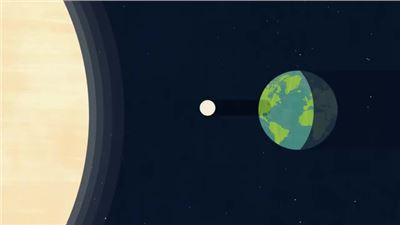
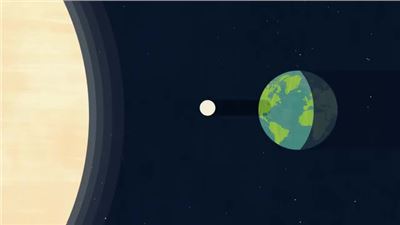
It is never safe to look directly at the sun's rays, even if the sun is partly obscured. When watching a partial eclipse you must wear eclipse glasses at all times if you want to face the sun, or use an alternate indirect method. This also applies during a total eclipse up until the time when the sun is completely and totally blocked. During the short time when the moon completely obscures the sun, known as the period of totality, it is safe to look directly at the star, but it's crucial that you know when to take off and put back on your glasses. First and foremost: Check for local information on timing of when the total eclipse will begin and end. NASA's page of eclipse times is a good place to start. Second: The sun also provides important clues for when totality is about to start and end. Published on August 1, 2017 by NASA Goddard
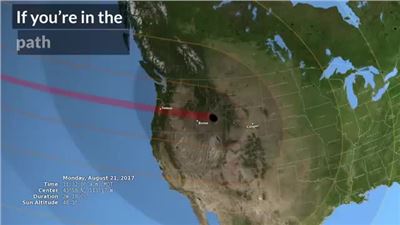
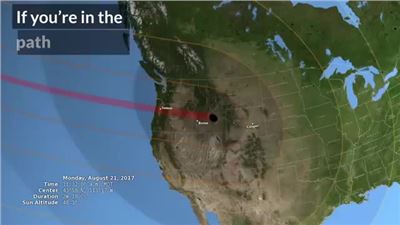
On Monday, August 21, 2017, our nation will be treated to a total eclipse of the sun. The eclipse will be visible, weather permitting, across all of North America. The whole continent will experience a partial eclipse lasting two to three hours. Halfway through the event, anyone within a 60 to 70 mile-wide path from Oregon to South Carolina will experience a total eclipse. During those brief moments when the moon completely blocks the sun's bright face for 2 + minutes, day will turn into night, making visible the otherwise hidden solar corona, the sun's outer atmosphere. Bright stars and planets will become visible as well. This is truly one of nature's most awesome sights. The eclipse provides a unique opportunity to study the sun, Earth, moon and their interaction because of the eclipse's long path over land coast to coast. Scientists will be able to take ground-based and airborne observations over a period of an hour and a half to complement the wealth of data provided by NASA assets. To learn all about the 2017 Total Eclipse: https://eclipse2017.nasa.gov/ Published on June 21, 2017 by NASA’s Goddard
El Celibato es una novela que atrae y cautiva el lector desde la primera pagina hasta la última con su cuento encantador y un estilo de prosa contemporánea.
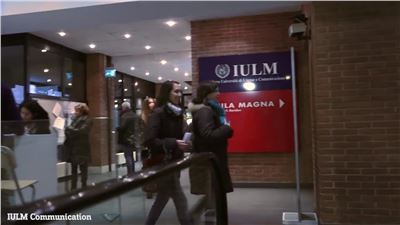
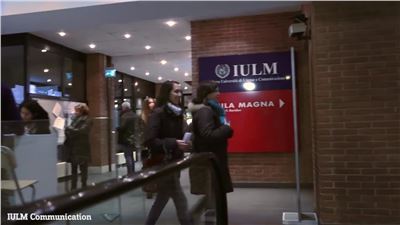
The students from the University of South Carolina Upstate have participated in the IULM's Summer School in Arts, Design and Cultural Economics. We asked them to tell us what they think about IULM and our country.
El Celibato es una novela que atrae y cautiva el lector desde la primera pagina hasta la última con su cuento encantador y un estilo de prosa contemporánea.
It is never safe to look directly at the sun's rays, even if the sun is partly obscured. When watching a partial eclipse you must wear eclipse glasses at all times if you want to face the sun, or use an alternate indirect method. This also applies during a total eclipse up until the time when the sun is completely and totally blocked. During the short time when the moon completely obscures the sun, known as the period of totality, it is safe to look directly at the star, but it's crucial that you know when to take off and put back on your glasses. First and foremost: Check for local information on timing of when the total eclipse will begin and end. NASA's page of eclipse times is a good place to start. Second: The sun also provides important clues for when totality is about to start and end. Published on August 1, 2017 by NASA Goddard
On Monday, August 21, 2017, our nation will be treated to a total eclipse of the sun. The eclipse will be visible, weather permitting, across all of North America. The whole continent will experience a partial eclipse lasting two to three hours. Halfway through the event, anyone within a 60 to 70 mile-wide path from Oregon to South Carolina will experience a total eclipse. During those brief moments when the moon completely blocks the sun's bright face for 2 + minutes, day will turn into night, making visible the otherwise hidden solar corona, the sun's outer atmosphere. Bright stars and planets will become visible as well. This is truly one of nature's most awesome sights. The eclipse provides a unique opportunity to study the sun, Earth, moon and their interaction because of the eclipse's long path over land coast to coast. Scientists will be able to take ground-based and airborne observations over a period of an hour and a half to complement the wealth of data provided by NASA assets. To learn all about the 2017 Total Eclipse: https://eclipse2017.nasa.gov/ Published on June 21, 2017 by NASA’s Goddard