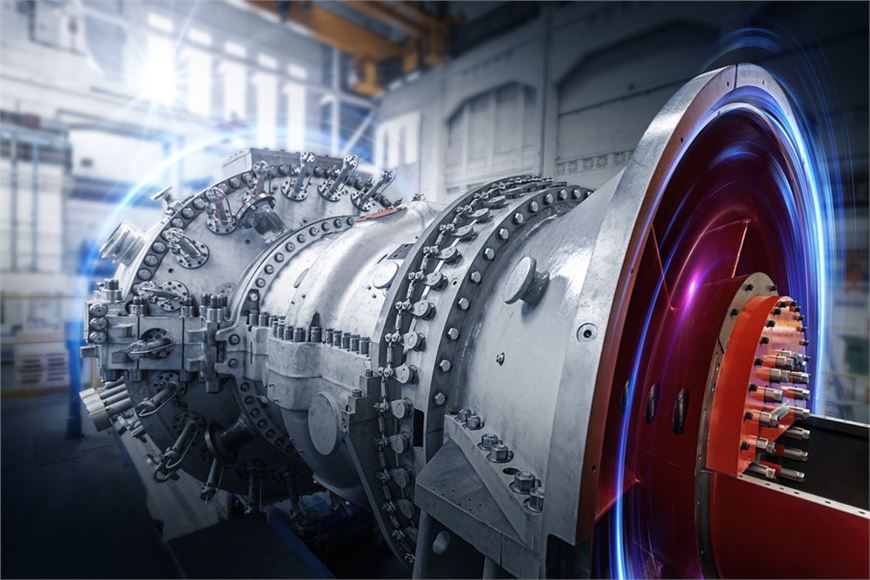
Ansaldo Energia delivers hydrogen-flexible turbines, ultra-fast grid response, predictive intelligence with cybersecurity, advanced nuclear, and green hydrogen — turning energy transition into strategic power and control.
In an era where energy sits at the intersection of geopolitics, industrial competitiveness, and national security, Ansaldo Energia has emerged as more than a turbine manufacturer—it is a systems orchestrator for the next phase of global power infrastructure. What crystallized at the company’s '2026 Innovation Day" is a fully integrated architecture: hydrogen-ready thermal generation, ultra-responsive grid stabilization, predictive digital intelligence with embedded cybersecurity, next-generation nuclear, and green molecule production. This is not incremental engineering. It is deliberate leverage in the energy transition.
At the heart of the strategy is fuel flexibility—a decisive advantage in volatile markets. Ansaldo’s turbines already operate on hydrogen blends up to 70 percent by volume, with a clear roadmap to 100 percent hydrogen capability by 2030 via its award-winning FLEX4H2 project and Constant Pressure Sequential Combustion technology. The GT36 heavy-duty turbine has been tested at full load on pure hydrogen without derating or diluents, preserving efficiency above 62 percent in combined cycle. This flexibility turns legacy assets into future-proof platforms. Operators avoid the multi-billion-euro risk of stranded infrastructure; instead, they can pivot between natural gas, biofuels (as demonstrated at Ireland’s Tarbert plant running 100 percent on waste-derived HVO), and green hydrogen as supply chains mature. The economic upside is profound: extended asset life, lower capital expenditure on new builds, and the ability to arbitrage fuel prices while meeting tightening decarbonization mandates.
Speed and stability deliver the second layer of advantage. In grids dominated by intermittent renewables, responsiveness equals revenue and resilience. The GT36 can ramp at up to 100 MW per minute—enough to power a mid-sized city in seconds—enabling rapid frequency regulation and ancillary services that monetize flexibility. Complementing this are synchronous condensers, now deployed across the UK and Italian grids by Terna, which supply critical inertia and reactive power. These “silent stabilizers” prevent cascading blackouts and maintain voltage quality even when inverter-based renewables surge or dip. The strategic pro is clear: higher renewable penetration without compromising reliability, reduced curtailment losses, and a grid that is inherently more resistant to both physical and cyber-induced disruptions.
The invisible backbone is digital intelligence fused with cybersecurity. Ansaldo’s Integrated Plant Support centers in Genoa and Abu Dhabi monitor over 300 machines worldwide, processing more than 300,000 data points per second. Decades of proprietary algorithms deliver true predictive maintenance—flagging anomalies before failure. Critically for critical infrastructure, this platform embeds OT/ICS cybersecurity by design, aligned with ISA/IEC 62443, NERC CIP, NIST, and ISO 27001 standards. Partnerships with leaders like Leonardo, TXOne, and Kaspersky enable governance, prevention, detection, and rapid response across the plant’s digital layer. In an age of rising state-sponsored attacks on energy systems, this is not optional—it is sovereign-grade protection that turns data into a strategic shield, slashing unplanned downtime while hardening plants against ransomware or sabotage.
Nuclear extends the horizon toward true energy sovereignty. Through Ansaldo Nucleare, the group manages full plant lifecycles while advancing Small Modular Reactors and Generation IV designs such as the EAGLES-300 lead-cooled fast reactor, selected by the European SMR Alliance. These compact, factory-built units offer inherent passive safety, high-temperature process heat for hydrogen production, and scalable baseload power—delivering carbon-free electricity and industrial heat exactly where needed. The pros are geopolitical as much as technical: reduced dependence on imported fuels, enhanced supply-chain control, and dispatchable power that complements variable renewables without the intermittency tax.
Ansaldo Green Tech’s AEM electrolyzers integrate directly with renewables for efficient green hydrogen, while carbon-capture partnerships close the loop on residual emissions. The result is a layered, pragmatic decarbonization path that never forces an artificial choice between reliability and sustainability.
With operations in 100 countries and a patent portfolio now exceeding 1,954 active filings after 13 new grants in 2025 alone, Ansaldo Energia is not merely participating in the energy transition—it is architecting the integrated systems that will define it. In the emerging New Renaissance of infrastructure, those who master this convergence of flexibility, speed, intelligence, and security will not only generate power. They will command the conditions under which entire economies thrive.

Roberto Masiero
