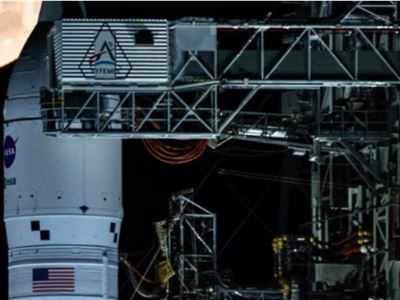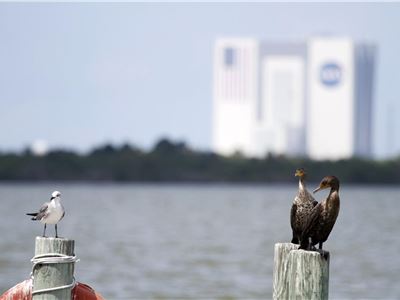
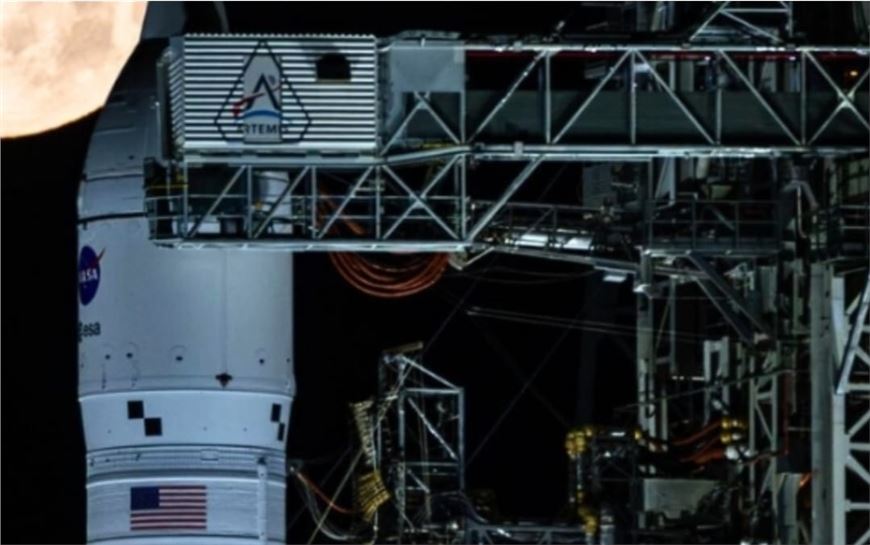
The Space Launch System (SLS) rocket, towering at Launch Complex 39B, has just completed a demanding wet dress rehearsal—a full fueling test designed to simulate launch-day procedures under cryogenic conditions. Teams successfully loaded hundreds of thousands of gallons of liquid hydrogen and oxygen into the core and interim cryogenic propulsion stages, progressed through vent and relief tests, achieved replenish mode to maintain flight-ready levels, and even advanced into terminal count at T-10 minutes. Closeout crews sealed the Orion spacecraft's hatches in the White Room, verified environmental systems, and prepared for simulated crew ingress.
Yet, friction emerged in the final stretches. Engineers detected liquid hydrogen leaks—particularly at the base of the rocket near the service mast umbilical—along with pressure anomalies, fueling pauses tied to unusually cold weather affecting seals and lines, and intermittent communication glitches. These issues forced NASA to halt the test shortly after midnight on February 3, with about 5 minutes and 15 seconds left in the simulated countdown. After thorough data review, the agency announced it would forgo the remaining February launch opportunities (which extended through February 11) to allow for detailed analysis, hardware mitigations, and a second full wet dress rehearsal. March now stands as the earliest viable window, with potential dates clustered around March 6–9 and March 11 (NET March 7 at 01:29 UTC / March 6 at 20:29 EST), and backups stretching into April if needed.
The Artemis II crew—commander Reid Wiseman, pilot Victor Glover, mission specialist Christina Koch (all NASA), and mission specialist Jeremy Hansen (Canadian Space Agency)—emerged from their nearly two-week quarantine in Houston. They now await a revised timeline, with plans to re-enter quarantine roughly two weeks before the next attempt. This delay, while disappointing for momentum, underscores the unforgiving precision required for humanity's return to deep space: the first crewed lunar flyby since Apollo, a 10-day free-return trajectory mission to test Orion's life-support systems, heat shield, and deep-space navigation in preparation for future landings.
From Orlando's local vantage, the ripple effects are tangible. The Kennedy Space Center Visitor Complex had already sold out launch-viewing packages for the anticipated February window; those ticket holders now monitor updates for rescheduling. Nearby beaches and viewing spots that typically fill with crowds for rollouts and tests remain on alert, while the broader Space Coast economy—still riding high from 2025's record 109 orbital launches—continues its steady hum with ongoing commercial activity, including SpaceX Starlink deployments. The pause offers breathing room: time for engineers to address cryogenic seal integrity, refine fueling protocols, and ensure no compromise on crew safety for what will be the farthest humans have traveled since 1972.
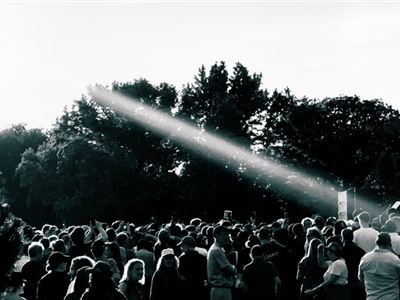
These technical hurdles find an unexpected echo thousands of miles away in eastern Sicily, where the ancient city of Catania pulses with one of the world's most intense religious festivals: the Feast of Sant'Agata (Saint Agatha), running February 3–5. Catania's patron saint, martyred in the 3rd century, is honored through an all-night, multi-day celebration that draws hundreds of thousands. On February 3, the "Offering of the Wax" and Procession of the Candelora see massive candle bearers—some carrying towering, ornate "candelore" weighing tons—parade through narrow Baroque streets amid clouds of incense, horse-drawn carriages, street theater, and fireworks. February 4 brings the Dawn Mass and Grand Procession of the silver fercolo (reliquary bust) containing the saint's relics, borne on the shoulders of devotees in white tunics ("sacchiteddi") who chant and sway in synchronized devotion. The final day, February 5, culminates in a Pontifical Mass and closing procession, with the fercolo returning to the cathedral amid explosions of fireworks and communal relief.
The festival's raw energy—chaotic crowds pressing forward, synchronized human effort amid heat, noise, and unpredictability—mirrors the pad's meticulous countdowns in reverse: both demand collective discipline, ritual precision, and resilience when things go awry. Where KSC teams troubleshoot leaks in controlled isolation, Catania's participants navigate sensory overload in open streets, yet both embody endurance through shared purpose.
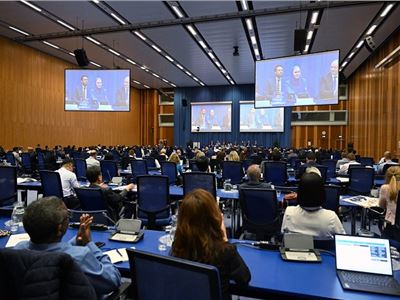
Layering these scenes is UNESCO's ongoing "World Heritage Contribution to Sustainable Development Goals" project (2023–2028), coordinated by the World Heritage Institute of Training and Research for the Asia and the Pacific Region (WHITR-AP). For 2026, the thematic focus is precisely "Knowledge & Skills," inviting submissions of good practices (deadline March 31, 2026) that demonstrate heritage's role in transmitting traditional knowledge, fostering cultural diversity, and empowering communities. Emphasis falls on integrating heritage into formal education (primary through tertiary), vocational training, and creative fields; promoting advanced conservation skills; and leveraging policies to respect diversity while advancing sustainable development. This framework encourages viewing sites as dynamic cultural-ecological systems, where intangible traditions—like festival rituals—link to tangible preservation.
From Orlando's perspective—where launch delays test engineered patience—these distant pulses connect loosely but meaningfully. Space missions probe human limits in sterile, high-stakes environments; Sicilian festivals test communal bonds in vibrant, unpredictable ones; UNESCO initiatives test how digital tools (including emerging AI for documentation and education) can preserve without homogenizing. No orchestrated symphony emerges—just quiet alignments across domains. Progress, whether propelling toward lunar orbits or safeguarding ancestral rites, seems to thrive not on flawless execution but on attentive listening to friction: hydrogen leaks demanding redesign, crowd surges requiring choreography, heritage transmission needing ethical safeguards.
In these early February signals, a subtle message lingers: renewal rarely arrives in straight lines. It builds through recalibration—engineers reviewing telemetry overnight, devotees shouldering relics at dawn, global stewards calling for practices that honor diversity. The pad stands ready, the streets still echo with chants, and the quiet work continues, hinting that true leaps forward often follow the patient mapping of every small resistance.
- Tags:
- Categories: signals