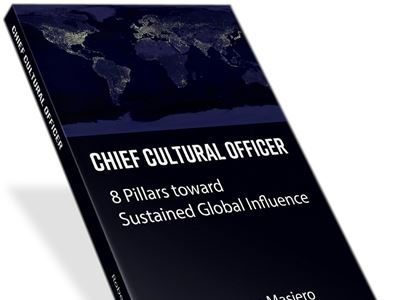
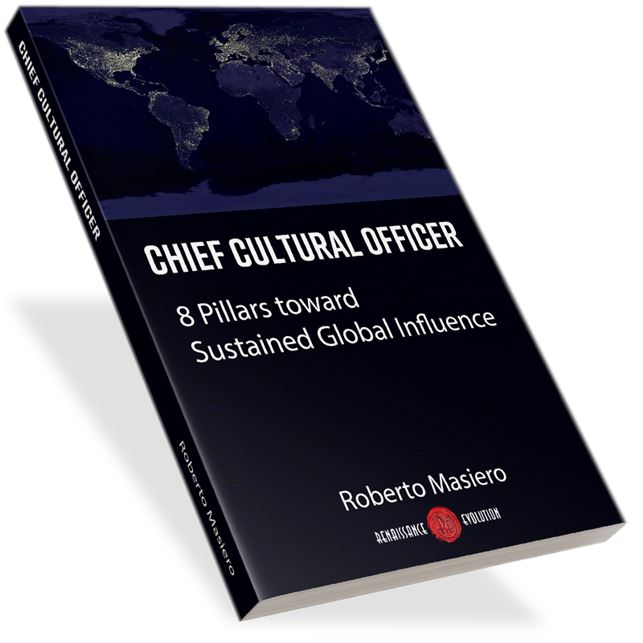
At just 84 pages in its paperback edition, the book distills a bold proposition: organizations—corporations, governments, nonprofits—can unlock deeper, more enduring value by elevating culture from a peripheral concern to a C-suite priority. Masiero, drawing from his extensive background in international relations, business strategy, and cultural diplomacy, argues for the creation of a dedicated Chief Cultural Officer (CCO) role to bridge internal values with external impact in an increasingly interconnected world.
The book's core thesis is straightforward but ambitious. Traditional leadership models focus on finance, operations, and innovation, yet they often overlook the human and contextual layers that determine long-term success. Masiero posits that a CCO—visionary, convener, and culture influencer—can predict cultural trends, convene diverse stakeholders, and shape organizational narratives that resonate both inward and outward. This isn't mere HR or branding; it's strategic governance. The CCO acts as a translator between the organization's mission and the host culture's realities, creating "a suitable bridge for the communication of context and value both from the corporation outward and from the host culture inward."
Central to the text are the "eight pillars" that form the framework for this role. While Masiero keeps the structure concise (each pillar receives focused treatment), they collectively build a methodology for cultural leadership:
1. Visionary Leadership – Anticipating where culture and society are heading, beyond short-term metrics.
2. Convener Mastery – Bringing together disparate voices—internal teams, external partners, communities—for aligned action.
3. Cultural Intelligence – Deep understanding of diverse contexts to avoid missteps in global operations.
4. Value Creation through Influence – Shifting from transactional to relational influence for sustained loyalty.
5. Ethical Alignment – Ensuring organizational actions reflect authentic values in an era of scrutiny.
6. Narrative Architecture – Crafting stories that inspire and unify across borders.
7. Innovation in Tradition – Blending heritage with forward-thinking to drive relevance.
8. Global Sustainability – Building influence that endures through adaptability and mutual respect.
These pillars emerge not as abstract ideals but as practical imperatives. Masiero, founder of Renaissance Evolution—a Washington, D.C.-based think tank dedicated to education, public policy, and the revival of Renaissance-inspired ideals like individual dignity, artistic/scientific pursuit, and free expression—grounds his arguments in real-world experience. His work spans government relations, cybersecurity advisory (including as a founding member of the Vatican's Observatory for Cybersecurity), and cross-cultural initiatives between the Americas, Italy, and beyond. Renaissance Evolution, with offices in D.C., Miami, the Dominican Republic, and Tuscany, promotes Italian language and culture while training executives in the CCO curriculum derived from this very book.
The book's timeliness, even six years after publication, feels amplified in 2026. Amid AI-driven transformations, geopolitical tensions, and renewed debates over corporate purpose, the call for cultural stewardship resonates. Masiero's emphasis on rethinking corporate processes to include a "cultural shift" anticipates how organizations must navigate hybrid workforces, ethical tech adoption, and stakeholder capitalism. What sets the work apart is its blend of pragmatism and idealism. Masiero avoids dense theory, opting for clarity and brevity—ideal for busy executives. Yet the underlying inspiration draws from the Italian Renaissance: a historical moment when individual achievement, cross-disciplinary innovation, and open dialogue reshaped civilization. By channeling these ideals into modern C-suite strategy, the book subtly positions cultural leadership as a form of civilizational renewal—respecting dignity, fostering creativity, and rejecting censorship.
Since its release, the book's impact has extended beyond the page. In 2021, it inspired a proclamation in Broward County, Florida, declaring April 28 "Chief Cultural Officer Day," recognizing Masiero's contributions. Renaissance Evolution has since formalized the CCO curriculum into proprietary training programs, partnering with international academic institutions, governments, and private sectors. The methodology has trained executives worldwide, turning the book's concepts into actionable certification and academy offerings.
Critics might note the book's brevity limits deep case studies or empirical data, but this concision serves its purpose: to provoke rather than exhaust. It functions as both a standalone read and a gateway to broader engagement—whether through Renaissance Evolution's programs or ongoing dialogues on cultural diplomacy.
In the Books & Ideas section, Masiero's work stands as a quiet but insistent reminder: in turbulent times, sustained global influence isn't won through power alone, but through the thoughtful cultivation of shared meaning. As organizations face accelerating change—from orbital ambitions in Florida's Space Coast to heritage preservation in Tuscany—*Chief Cultural Officer* offers a compass: appoint someone whose sole mandate is to listen, convene, and shape culture with intention. The result? Not just survival, but enduring legacy.
For those drawn to intersections of business, diplomacy, and Renaissance humanism, this slim volume remains essential reading—a call to elevate culture from backdrop to forefront in the pursuit of meaningful influence.
- Tags:
- Categories: Books & Ideas